Tuesday, 16 April 2024

10 of those books


Dear all, I promised to post the details of the book which I quoted on Sunday evening, you can find it here:

Delighting in the Trinity (Paperback) by Tim Chester (10ofthose.com)

Also the catechism I ‘borrowed’ my definition of the Trinity can be found here below. The New City Catechism also has its own app, website and children’s version, but this is a lovely hardback edition with very helpful devotional readings. For any who don’t know, Catechisms are summaries of key Biblical truths in a Q and A format. They are usually regarded as very old fashioned, but I think they can be really helpful. Most use very old language, but not the New City Catechism, highly recommended.

The New City Catechism Devotional by Collin Hansen (10ofthose.com)

Also please remember to have a wee look at our very own online bookstall, featuring a selection of books we think would be helpful at good value..

Airdrie Ebenezer | 10ofThose UK

You’ll find a book in there called ‘Enjoying God’ by Tim Chester, looks very relevant to Sunday evening’s message. I haven’t read yet -wouldn’t normally recommend a book until I had- but it’s on my to be bought and read list!

Again thanks to David Pollard for all his hard work in liaising with 10 of Those and setting this up

Happy reading all!

Ross

Saturday, 18 December 2021

There is the Throne of David


'There is the throne of David;

and there from care released,

the song of them that triumph,

the shout of them that feast;

and they who with their Leader

have conquered in the fight,

forever and forever

are clad in robes of white.'

.

(Bernard of Cluny)

Wednesday, 28 July 2021

Another Voice was heard

"Hywel Griffiths preached lengthily, filled his sermons with word pictures, clearly felt in his soul the truths he was proclaiming, and poured out his love for everyone present. Accompanying all that was an indefinable influence. As Hywel spoke, heaven came to earth. Another Voice was heard. The invisible world was more real than the visible one. There was a touch of glory. Christ was more precious than anything or anyone in the universe. The Word came over with a self-authenticating force that was irresistible. Not to believe was not an option, because it was indescribably foolish. The only wise thing to do was to trust the Lord completely, and to love Him with all of my heart, soul, mind and strength."

(Stuart Olyott on the preaching of Hywel Griffiths from 'Something must be Known and Felt, 9)


Friday, 19 March 2021

Death Defeated


(originally posted to Airdrie Ebenezer Evangelical Church 12 April 2020)

When I was younger, myself and my wee brother had an Atari ST (a 1980s version of an Xbox!) It was our pride and joy. Over the years we collected a lot of games, and found that many of them had a familiar pattern; you would defeat the bad guys successfully as you progressed before meeting the ‘end of level baddie’. This baddie was bigger, stronger and scarier than those that had come before. The end of game baddie was the biggest and the baddest and the scariest of all. Usually we couldn’t beat this baddie, but sometimes we could cheat it (cheat codes could usually be obtained at school) How happy we were when we managed to win!

As we walk through the gospel accounts of the life and work of Jesus we see him display his authority over things which seem to us to be enormously powerful and fearsome. The wind and the waves are stilled with a word from his lips. Illness bows the knee before him as the sick are made well. Demons and the spiritual forces of darkness are no match for his might- fleeing at his command. But the thing which frightens us most, is death. 

In 1 Corinthians 15 the apostle Paul argues for the truth and the importance of the resurrection of Christ. He reminds them of that which he proclaimed:

3 “that Christ died for our sins according to the Scriptures,  4 that he was buried, that he was raised on the third day according to the Scriptures,  5 and that he appeared to Peter, and then to the Twelve.”

Even death bows the knee before King Jesus! He who was dead is alive forevermore! And this victory is not just for Jesus, it is for all who trust in him. Our sins were nailed to his cross. When Goliath fell the victory wasn’t just for David- it was for all of God’s people- those who had stood terrified in the presence of such a foe.

Jesus’ victory is your victory if he is your Lord and Saviour. Death has been defeated. It has become the doorway to life in the presence of your Lord.


Paul goes on to remind the Corinthians that when Christ comes again death will be ‘destroyed’ (or ‘entirely removed’)

 25 “For he must reign until he has put all his enemies under his feet.  26 The last enemy to be destroyed is death.”

Easter is a time for looking back to the resurrection of our Lord with gratitude and joy. It is also a time for looking forward to the day he returns to make all things new, then “There will be no more death or mourning or crying or pain, for the old order of things will have has passed away.”

We cannot beat our final enemy in our own strength or goodness, we cannot cheat death and yet we have no need to live in fear, our greatest enemy has been toppled and his presence will soon be utterly removed by King Jesus. Are you trusting in Him?

If so, rejoice this Easter, and always!

Yours in His service

Ross

Tuesday, 19 January 2021

Trouble or Trust

(originally posted to Airdrie Ebenezer Evangelical Church 5th April 2020)

Spring has sprung! The clocks have moved forward. The sun is shining (a wee bit) but we’re all still stuck indoors, watching our screens and hearing the news of more people succumbing to disease and death. What do we have to say to a hurting world in days like these?

Jesus, as he prepared his followers for his own death, said: 


John 14:1-4, 6b "Do not let your hearts be troubled. Trust in God; trust also in me.  2 In my Father's house are many rooms; if it were not so, I would have told you. I am going there to prepare a place for you.  3 And if I go and prepare a place for you, I will come back and take you to be with me that you also may be where I am.  4 You know the way to the place where I am going."  

 6 …"I am the way and the truth and the life. No one comes to the Father except through me.


Firstly, we can say that there IS a way. There is a way for us to know God as our Father; to live in right relationship with him, and therefore to live free from fear. Jesus still says “Do not let your hearts be troubled” to his people. He is with us in the troubles of this life and our place is secure in that new world without sickness, separation or sorrow (Rev 21). 

Secondly, we can say that this way is Jesus. We must be clear. Jesus does not say merely that he knows the way, but that he is the way. Jesus is not just a good teacher who offers good advice as to how we might try to please God. He is God the Son, sent to seek and to save that which was lost. Neither does Jesus say that he is a way, one among many. As is the case in all of the I AM statements, Jesus makes an exclusive claim- he is the only way; the only way to life in all of its fullness, the only way to life eternal.

Thirdly, we can say there is one we can trust absolutely, his Name is Jesus. I have read recently that there are people trying to take advantage of the vulnerable in the Corona-Crisis. Some of us have been let down or even betrayed by those we have trusted in the past- Jesus assures us that he is the very truth of God. It is impossible for him to lie, all of the glorious promises of God find their yes and amen in him.

That means we can trust him, allowing our hearts to be free from fear- and encourage others to do the same.  


Friday, 18 December 2020

Forward Together

(originally posted to Airdrie Ebenezer Evangelical Church 29th March 2020)

It’s often said that we never really appreciate what we have until we lose it. That could certainly be said for many of us in recent days. Suddenly we’re unable to shake hands, leave our homes, meet with others, buy toilet roll!.. 

 These are unprecedented circumstances which present unprecedented challenges. As elders we’ve been in constant discussion and prayer as to how the Church might be found faithful and fruitful in Christ’s service in these strange days. Maybe outlining some of our considerations as leaders would be helpful.


A People of Peace

 As believers in the Lord Jesus we have nothing to fear. As Jesus was preparing his disciples for the frightening reality of his own death he promised them that they would not be left alone- they would receive the Holy Spirit. Jesus then said:

“Peace I leave with you; my peace I give you. I do not give to you as the world gives. Do not let your hearts be troubled and do not be afraid.”

That same Spirit is with us today. He is more than able to comfort us and bring the presence of Jesus to bear in our lives. 

Jesus is still with us by his Spirit and God is still Sovereign. These may be unprecedented times for us, but the God who has seen Kingdoms rise and fall -our God- is still on the throne. We rest in that knowledge today, tomorrow and always.

We also have a real opportunity to bear witness to the freedom from the fear of death that is ours in Christ Jesus at this time.


A Community of Love

The Church ought to be a community of love. In this strange season (and it is only a season) loving others means changing the way we serve together for the gospel. Keeping our distance from each other, meeting less often, not shaking hands seems to cut to the very heart of who we are as a loving Church family- but it is the best way to curb the spread of this virus and therefore to love the most vulnerable in our society. It allows us to show our respect for the authorities God has put in place while loving our neighbour as ourselves. It ought to drive us not ultimately to Whatsapp or to Facebook -or to despair! But to our knees in prayer for each other, for our community and for our world.


Making it personal

May I close by encouraging all of us to remember the appeal of the apostle Paul: “Do not be anxious about anything, but in every situation, by prayer and petition, with thanksgiving, present your requests to God.”

And also to think prayerfully about how you can best serve those in need at this time in the name of Christ Jesus.

Yours in Christ’s service

Ross

Friday, 20 November 2020

Coming Soon!


Today Lanarkshire moves into tier 4 of lockdown restrictions (the highest level in Scotland). After so many months of rules and regulations, it’s something no one is looking forward to. 

2020 has been a difficult year. And yet in the struggles and the sorrows there have been causes to be grateful, even joyful too. We’ve spent a lot more time in our houses and yet we’ve been able to say with Paul (who was not in lockdown- but was literally locked-up for his Christian faith!)

“But God’s Word is not chained!”

People have been drawn to church for the first time in a long time, or the first time ever, growth in grace has taken place and we’ve learned how to adapt to new forms of fellowship.

At Airdrie Ebenezer we’ve used Zoom, WhatsApp and our Church blog more than ever before. It’s been a long time since I’ve blogged regularly on my own personal blog, so I thought I might begin to post the devotional articles I write on the Church blog up here too.  

Tuesday, 5 May 2020

Keller on the Christian Gospel


'The Christian Gospel is that I am so flawed that Jesus had to die for me, yet I am so loved and valued that Jesus was glad to die for me. This leads to deep humility and deep confidence at the same time. It undermines both swaggering and snivelling. I cannot feel superior to anyone, and yet I have nothing to prove to anyone. I do not think more of myself or less of myself. Instead, I think of myself less.'

— Tim Keller, The Reason for God

Saturday, 5 January 2019

John Calvin on the Hypostatic Union


John Calvin on Christ's divine and human natures:

'For we know that in Christ the two natures were united into one person in such a manner that each retained its own properties; and more especially the divine nature was in a state of repose, and did not at all exert itself, whenever it was necessary that the human nature should act separately, according to what was peculiar to itself, in discharging the office of mediator. There would be no impropriety, therefore in saying that Christ, who knew all things (John 21:17), was ignorant of something in respect of his perception as a man; for otherwise he could not have been liable to grief and anxiety, and could not have been like us (Hebrews 2:17).'

John Calvin’s Commentaries on the Harmony of the Gospels, Vol 3, p145

Also see:


Wednesday, 14 November 2018

Spurgeon on blessing God

 "If we never cease to bless him till he ceases to bless us, our employment will be eternal."

Charles Spurgeon (commenting on Psalm 103:5)

Friday, 20 April 2018

Suffering Patience Victory


'My dear brother, we must not mind a little suffering for Christ's sake.

When I am getting through a hedge, if my head and shoulders are safely through, I can bear the prickling of my legs. Let us rejoice in the remembrance that our Holy Head has surmounted all His suffering and triumphed over death.

Let us follow Him patiently; we shall soon be partakers of His victory.'

Charles Simeon

Saturday, 31 March 2018

Bonhoeffer on Humility


'[true Christian] humility.. is wholly unselfconscious, even as the eye can see other people but can never see itself.

Such hiddenness will one day be made manifest, but that will be God's doing, not ours.'

(Bonhoeffer, Cost of Dicipleship, 117)


Tuesday, 7 November 2017

How firm a foundation!

How firm a foundation, ye saints of the Lord,
is laid for your faith in His excellent Word!
What more can He say than to you He hath said,
who unto the Saviour for refuge have fled?

"In every condition, in sickness, in health,
in poverty's vale, or abounding in wealth,
at home and abroad, on the land, on the sea,
as days may demand, shall thy strength ever be."

"Fear not, I am with thee; O be not dismayed,
for I am thy God and will still give thee aid.
I'll strengthen thee, help thee, and cause thee to stand,
upheld by My righteous, omnipotent hand."

"When through the deep waters I call thee to go,
the rivers of sorrow shall not overflow;
for I will be with thee, thy troubles to bless,
and sanctify to thee thy deepest distress."

"When through fiery trials thy pathway shall lie,
My grace, all-sufficient, shall be thy supply.
The flame shall not hurt thee; I only design
thy dross to consume, and thy gold to refine."

"The soul that on Jesus hath leaned for repose
I will not, I will not desert to his foes;
that soul, though all hell should endeavour to shake,
I'll never, no never, no never forsake!"

Attributed to: George Keith (1787)

Friday, 16 September 2016

The Low Door of Humility


Whilst speaking on Luke 18:9-17 at the prayer meeting on Wednesday evening I made mention of the 'Door of Humility' in the Church of the Nativity. It seems fitting that the door has been made so low, that all must bow to enter in. All who want to come to King Jesus, and enter his Kingdom, must enter his presence in humility and childlike trust. No matter how prominent or pre-eminent we may be in the eyes of the world, there is one doorway into the Kingdom of God, and no-one can enter through it without bowing down.

In the back of my mind I knew I'd read a quote along these lines. I didn't manage to find it in time for the prayer meeting, but it was Luther. (Luther is writing about the petition in the Lord's prayer 'forgive us our debts as we forgive our debtors.')
If anyone insists on his own goodness and despises others... let him look into himself when this petition confronts him. He will find he is no better than others and that in the presence of God everyone must duck his head and come into the joy of forgiveness only through the low door of humility.
Martin Luther, Large Catechism, 93 (as quoted in Prayer, Tim Keller, 115)
. 

Friday, 1 July 2016

Importunate in prayer


Following on from the quote from Newton's childhood pastor, I was struck by the similarities in this from Martyn Lloyd-Jones in Joy Unspeakable:

Without an element of importunity and persistence, or urgency and almost a holy violence with God, we have little right to expect that God will hear our prayer and answer it.

MLJ, Joy Unspeakable, 382

Tuesday, 21 June 2016

"Beg it of Him, who is the God of grace..." Pray for your children


John Newton’s mum died when he was 6. His father was a moral man, but not a godly one. Newton said of his dad “I am persuaded he loved me, but he seemed not willing that I should know it.” Newton believed the teaching and prayers of his mum in those early years had a huge bearing on the direction of his life.  

Reflecting on this Marylynn Rousse points to a sermon preached by Newton’s childhood pastor, David Jennings:
'As Newton attributes so much to his mother's early teaching and prayers, it is particularly interesting to note a section of one of David Jennings's Sermons to Young People, preached while Elizabeth Newton was still alive and John would have been about five or younger. Jennings challenged the parents from 1 Chronicles 29:19, “And give unto Solomon my son a perfect heart.”

“Did you ever pray this prayer for your children in good earnest? Lord, give them a perfect heart. What pains have you taken to instruct and teach them the good ways of holiness?... O! be earnest and importunate with God, be daily intercessors with him for the souls of your dear children. Beg it of him, who is the God of grace, that he would give your children a perfect heart.”

Such was the faithfulness of both pastor and mother for the child who was later to write, “Twas grace that taught my heart to fear, and grace my fears relieved.”'


The Life of John Newton, Richard Cecil (Updated by Marylynn Rousse), 20

Thursday, 9 June 2016

From this day forward


I'm going to be conducting a wedding for the first time in quite a while tomorrow. 10 years into marriage, 8 years into pastoral ministry, 5 years of battling ill-health I certainly now have a deeper appreciation for the weight of these words:
By this sign you take each other, to have and to hold from this day forward
For better, for worse
For richer, for poorer
In sickness and in health
To love and to cherish
For as long as you both shall live.
Since you have covenanted together in marriage and have declared your love for each other before God and these witnesses, I now proclaim you to be husband and wife
In the name of the Father, the Son and the Holy Spirit.


Tuesday, 17 May 2016

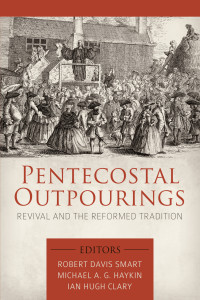
Pentecostal Outpourings: Revival & the Reformed Tradition- A Review

Pentecostal Outpourings: Revival and the Reformed Tradition
Editors: Robert David Smart, Michael AG Haykin, Ian Hugh Clary

 “Biblically and historically speaking, the term revival represents the powerful work of the Holy Spirit in which there is recovered a new awareness of the holiness of God among His people. This heightened knowledge brings in a new season of the conviction of sin, which, in turn, leads to heartrending repentance. This lowly humility ushers in an awakened love for Christ. Believers begin to pursue personal holiness. Love for other believers intensifies. The gospel spreads like wildfire. Sinners are brought to faith in Christ, and the church is enlarged and empowered..” (p5)
This is how Stephen J Lawson defines revival in the foreword to Pentecostal Outpourings. It is a definition which would undoubtedly meet with the approval of the authors of this great work.
The book itself is divided into two sections:

Firstly- Revival in the British Isles. This half of the book is comprised of 4 essays overviewing revivals within reformed traditions in the UK; Welsh Calvinistic Methodists, Irish Dissenters, Calvinistic English Baptists, and Scottish Presbyterians respectively. Each of these chapters are well written summaries, and each manage to cover some oft neglected revivals (I found the information on the Kirk O’ Shotts revival in Scotland particularly new to me- even although I live relatively nearby.) None of the summaries are simplistic, but the footnotes offer excellent guidance in finding further reading should anything be of particular interest.

The second part of the book looks at the history of revivals in America, starting with a very helpful chapter on Jonathan Edwards (I’ve read a lot by Edwards, and at least one biography but this essay really helped place him in the context of the 18th century American church).

Subsequent chapters are equally well written- Peter Beck examines the revival movements in the Congregationalists in the 18th-19th Century, Tom J Nettles looks at Baptist revivals in the 18th and 19th centuries, and Joel Beeke covers revival and the Dutch Reformed Church in the 18th century.


"I remember the days of old; I meditate on all that you have done; I ponder the work of your hands." (Psalm 143:5)

The revival accounts outlined in Pentecostal Outpourings should to encourage us as we remember and reflect on what the Lord has done in our land in the past. Iain D Campbell says of John MacDonald in chapter 4:

“The remembrance of the working of the Lord’s right hand, in these favoured places, often cheered him when his heart was fainting in the toil of later and less fruitful years.”(p154)

These accounts will, I'm sure, cheer many believers as they labour in difficult days and challenging contexts in the cause of Christ.

Will you not revive us again, that your people may rejoice in you? (Psalm 85:6)

Any book on revival ought also to lead to prayer for more revivals. Robert Davis Smart says in the introduction:

“Subsequent outpourings of the Holy Spirit, working by and with the Word, are reviewed in this volume in order that we may seek God earnestly to revive His church once again soon…

Pentecostal Outpourings depicts these special seasons of mercy in such a way that readers will hope for revivals once more as well as learn from past revival leaders.”(p7,8)

This book achieves these goals, furthermore it is more balance, biblical and honest that many books on revival.

“Although the authors prize true revivals, we have taken special care to demonstrate that revivals are mixed with counterfeit Christianity and require wise leadership. Quality leadership in the midst of revivals requires discernment, as evil still seeks to ‘work us woe’.”(p8)

“Every work of God dealing with flawed human nature will be a mixed work: the wheat of genuine conversions will be mixed with the tares of artificial experiences.” (p35)

Pentecostal Outpourings is a real achievement and a very helpful resource, one that ought to be turned to again and again. Broad in scope, not shallow in depth, inspirational, honest and thoroughly biblical. A worthwhile addition to any reformed believer’s shelf.


This book was provided to me courtesy of Reformation Heritage Books and Cross-Focused Reviews in exchange for an honest review. 
.

Friday, 13 May 2016

Awaiting the breath of the Spirit


Kuyper’s famous Lectures on Calvinism were delivered at Princeton in 1898. The last lecture bore the title “Calvinism and the Future,” and its closing words were these:

‘The quickening of life comes not from men: it is the prerogative of God, and it is due to His sovereign will alone, whether or not the tide of religious life rise high in one century, and run to a low ebb in the next….
Now the period in which we are living at present, is surely at a low ebb religiously. Unless God send forth His Spirit, there will be no turn, and fearfully rapid will be the descent of the waters. But you remember the Aeolian Harp, which men were wont to place outside their casement, that the breeze might wake its music into life.

Until the wind blew, the harp remained silent, while, again, even though the wind arose, if the harp did not lie in readiness, a rustling of the breeze might be heard, but not a single note of ethereal music delighted the ear. Now, let Calvinism be nothing but such an Aeolian Harp,—absolutely powerless, as it is, without the quickening spirit of God—still we feel it our God-given duty to keep our harp, its strings tuned aright, ready in the window of God’s Holy Sion, awaiting the breath of the Spirit.’


Abraham Kuyper, Calvinism: Six Stone Lectures (New York: Fleming H. Revell, [1899]), 274–75.


(Quoted from Pentecostal Outpourings: Revival and the Reformed Tradition- Robert Davis Smart)


Friday, 11 March 2016

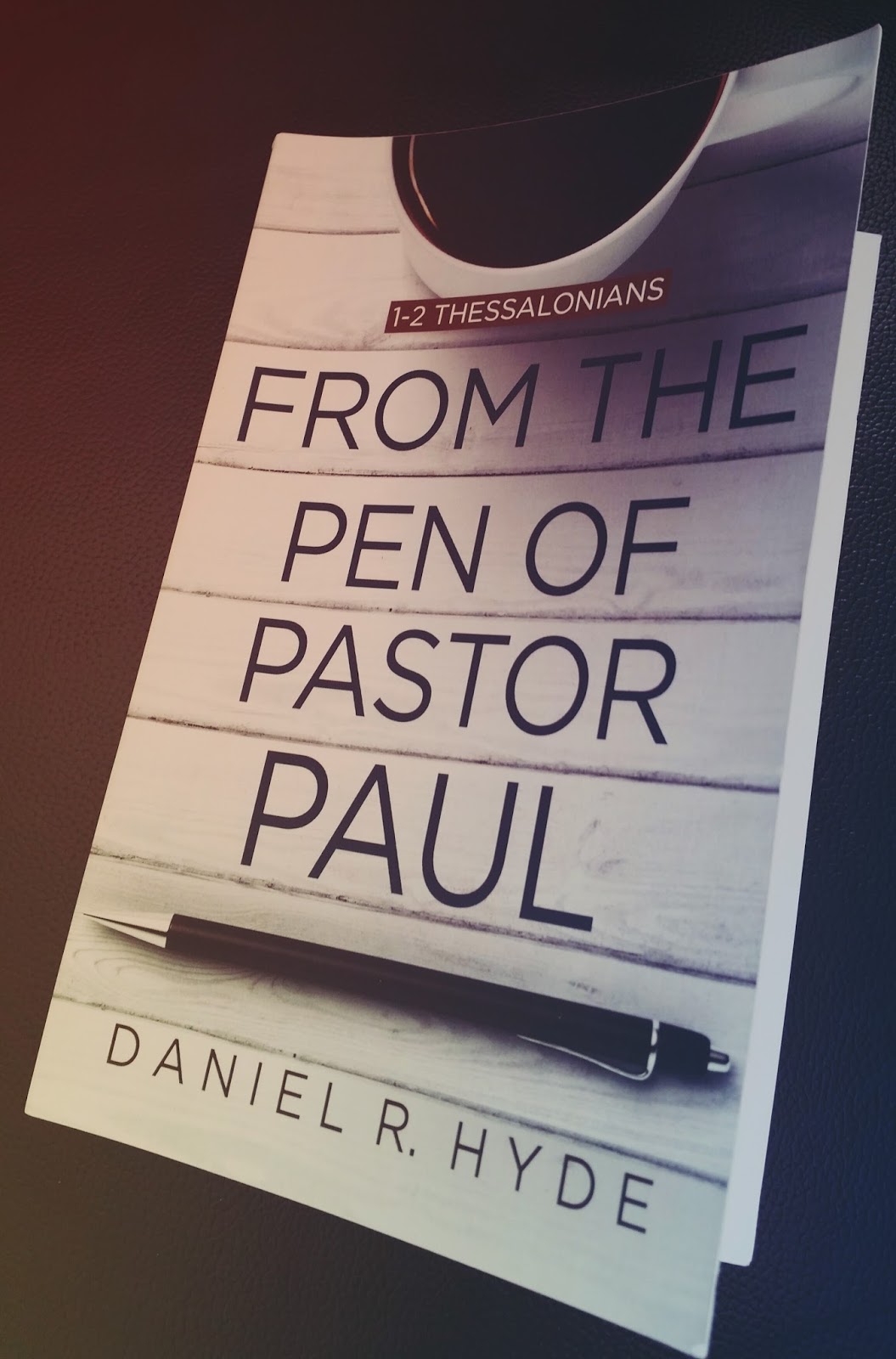
From the Pen of Pastor Paul- a Review


From the Pen of Pastor Paul is essentially a collection of 32 sermons (twenty on 1 Thessalonians, twelve on 2 Thessalonians) adapted to form a book. The author, Daniel R Hyde, is pastor of Oceanside United Reformed Church in California. Having turned down a call from another church, he re-committed himself to OURC and broke into his planned preaching program to lead the congregation through 1 and 2 Thessalonians.

There are things an expositional commentary like this can’t do. Firstly, a preacher has to be selective. Unless your pastor is a modern-day Martyn-Lloyd Jones, he won’t be able to preach a series of sermons on every Scriptural sentence. This is a collection of 32 sermons on both Thessalonian letters, not everything will be covered in depth. Even some of Paul’s most famous Thessalonian exhortations, get little attention (like “give thanks in all circumstances” for example 1 Thes 5:18). Sometimes disappointing, but a preacher has to make decisions about what not to say too.

Secondly, a preacher can’t devote huge amounts of time presenting scholarly debate on authorship, translation or historical context. Most of this exegetical work goes on in the behind the scenes, it sits under the surface of the sermon itself. There is no in depth discussion on Greek words, or contemporary theological debate.
I don’t think either of these things are problematic, but were I preparing a sermon series or Bible study on Thessalonians, this wouldn’t be the only modern commentary I’d turn to- a more detailed exegetical commentary would be a helpful companion.      

There are things a book like this can’t do, but there are certainly great strengths with this type of commentary too.

When done well, the commentary will do what good preaching does, it will move the heart as well as enlighten the mind, it will bring the intention of the 1st century author home to the modern day Christian with clarity and force.

This book ticks those boxes.

You can’t miss or doubt Hyde’s his love for Scripture and for the people to whom he preaches.

“The best commentaries on New Testament Epistles are often those that were born in the same way as the Epistles themselves: out of the womb of real pastoral concern and ministry.” Says Dr Conrad Mbewe in his commendation.

Hyde himself says in his foreword:

“I believe in 1 Thessalonians Paul opens his pastoral heart more than to any other congregation to which he wrote… John Stott said, Paul’s Thessalonian correspondence ‘reveals the authentic Paul… We hear his heart-beat and see his tears.’”
He goes on to say that the sermons which formed the basis of the book were the most personal, earnest, and applicatory that he had ever preached.  What believer would not benefit from a commentary like that?  

There were a number of traits which I grew to appreciate more and more as I worked my way through the book:

There is little in the way of illustrative stories and anecdotes- unfashionable, but Hyde’s style is more than engaging enough, and it makes the book accessible to those not as familiar with North American culture. He handles the text well, and he knows the hearts of his hearers. That makes for compelling reading all by itself.  

Secondly, Hyde leans on the wisdom of saints from past generations. When preaching through a biblical book he has ‘conversation partners’ from the Church Fathers, the medieval period, the Reformation, the Puritans as well as modern commentators. John Chrysostom, Thomas Aquinas, James Ferguson, FF Bruce and John Stott were those conversation partners through Thessalonians. Every generation has its strengths and weaknesses and some of the insights from these forefathers in the faith were really insightful and penetrating.

Thirdly, the book is simple, but not simplistic. It ought to be accessible and beneficial to all believers whether young or old, theologically trained or totally new to reading Christian books.  

In his chapter on the opening words of 1 Thessalonians, Hyde says:

… As a persecuted pastor himself, Paul’s greatest pastoral desire in his first letter back to the persecuted Thessalonian Christians was that they would persevere in their faith, hope, and love… As with Paul, a pastor’s desire for his people is that they would continually rekindle their passion for the gospel of our Lord Jesus Christ. (p18,19) 

The greatest compliment I can pay to this commentary, is that as I read it, it did continually rekindle my passion for the Gospel of our Lord Jesus Christ. I wholeheartedly recommend it.


I received this book for free from Evangelical Press in exchange for this honest review. I was not required to write a positive review of the book.